
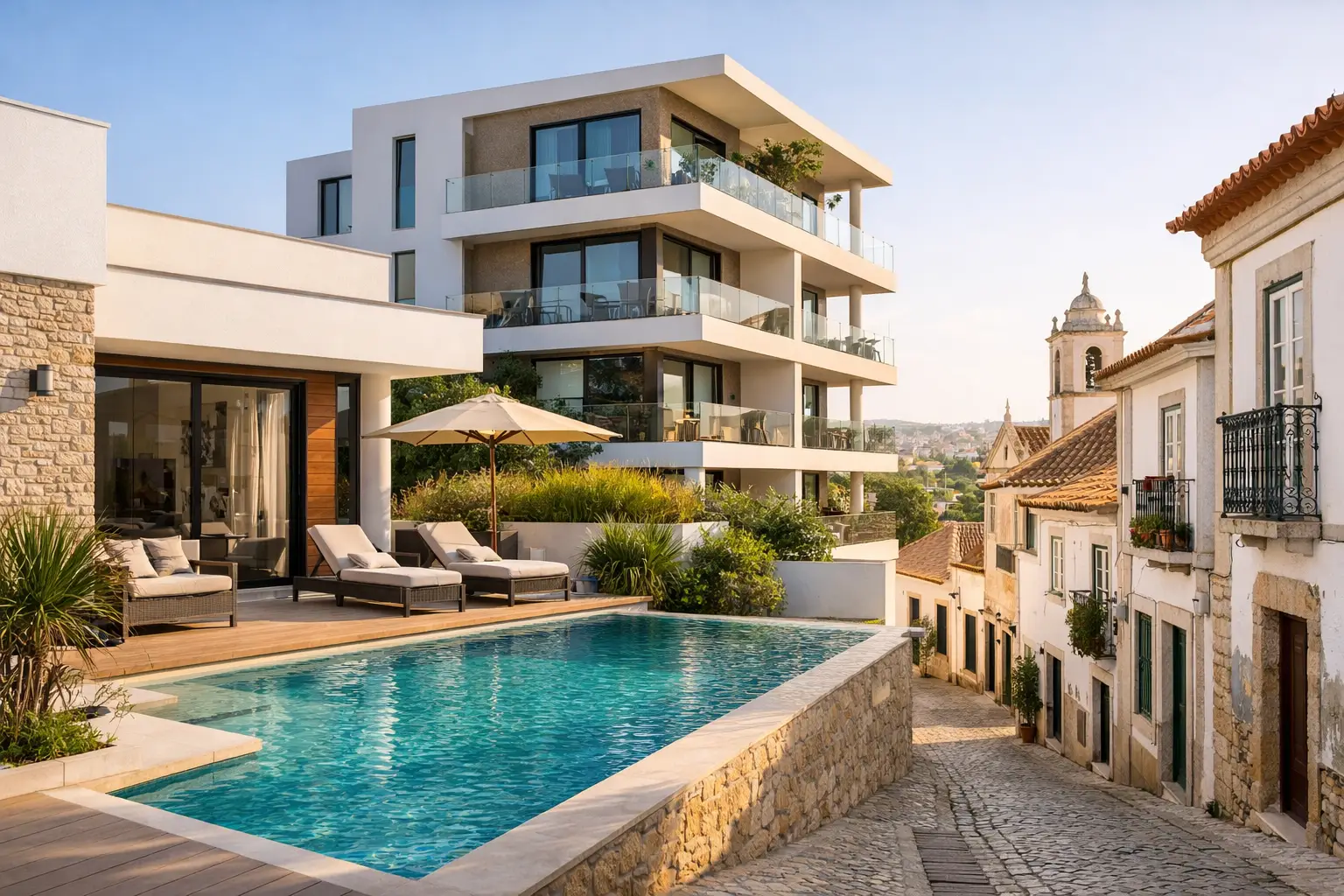
Portugal Property Purchase Guide for Clearer Choices

A beautiful house can be the wrong purchase if the road outside becomes a rat run in August, the village goes quiet for five months, or every school run starts with a difficult 20-minute climb. That is the central problem this Portugal property purchase guide is designed to solve: not how to fall for a listing, but how to test whether a place will work in real life.
For overseas buyers, Portugal can look deceptively simple from a distance. Images suggest sun, shutters and an easy walk to the sea. Yet the decision usually turns on less glamorous details: whether you can park close to the door, how exposed the plot feels after dark, where you will buy bread in January, and whether the drive you tolerated once is still reasonable in a wet February.
Start with the life you want, not the property type
The most expensive early mistake is choosing an area because it is fashionable, then trying to make every available property fit. Begin with your actual routine. A retired couple who want a walkable morning, regular social contact and easy access to services need a different setting from a family balancing school runs, sports, airport journeys and visiting relatives. An investor may care less about their own commute but more about guest arrival, parking, seasonal demand and how straightforward the property is to use.
Write a short buyer brief before you start comparing homes. Include your non-negotiables, but also name the trade-offs you will accept. For example, do you prefer being able to walk to cafés, even if that brings summer noise? Would you exchange sea views for a more sheltered, year-round neighbourhood? Is a detached home essential, or would a well-positioned flat make everyday life easier?
Be precise about timing. “Near the beach” can mean a flat ten-minute walk, a steep descent with a return journey in heat, or a short drive followed by a fight for parking. “Close to town” may be true on a map but impractical on narrow roads or during peak season. A good brief gives you a way to reject attractive distractions quickly.
A Portugal property purchase guide should begin with area fit
Portugal is not one lifestyle market, and the Algarve is not one place. Coastline, inland villages, golf developments, established towns and newer residential edges all create different daily realities. Within a single postcode, the atmosphere can change materially from one street to the next.
Choose areas through practical questions rather than broad labels. How long does it take to reach the things you will use weekly? What does the neighbourhood feel like outside holiday periods? Are homes occupied year-round or largely seasonal? Is the route to the property comfortable after sunset? Does the street support the privacy, activity level and convenience you want?
For families, the ordinary journey matters more than the postcard moment. Test the route to school, food shopping, healthcare, activities and the airport at the times you would genuinely use it. For second-home buyers, consider how simple the house will be to open up, stock and enjoy after a flight. For long-term movers, look beyond restaurants and beach clubs towards services, community and the rhythm of winter.
There is no universally best Algarve location. A lively coastal town may be ideal for buyers who value movement, dining and walkability, while feeling overexposed or busy to someone seeking quiet. An inland home can offer space and a stronger sense of local life, but it may require more driving and feel isolated if you are not prepared for it. The right answer is the setting that supports your ordinary Tuesday, not just your best August weekend.
Read listings as prompts, not evidence
Listing photography is built to show a property at its most flattering angle. It rarely shows the bend in the access road, the building works next door, the block of flats overlooking the pool, or the distance between the front gate and the nearest useful shop. None of those facts automatically makes a home unsuitable. They do, however, affect value, enjoyment and future flexibility.
When a listing catches your attention, separate what you know from what you assume. A view may be wide but vulnerable to future development. A quiet lane may become a busy access route in summer. A renovated house may look finished while retaining awkward storage, poor drainage or limited practical outdoor space. A pool can be a major lifestyle asset, but it also changes maintenance, privacy and how the property works with children or guests.
Ask for a location-led assessment alongside the building itself. Consider the approach by car, the street at different times of day, pedestrian movement, neighbouring uses, parking pressure, noise sources and sightlines into the garden. Pay attention to slopes, steps and turning space. These details are easy to overlook when you are viewing several homes in a short trip, yet they are difficult to alter after purchase.
In Algarve properties, orientation deserves particular scrutiny. South-facing light sounds attractive, but exposed outdoor space can become too hot at certain times of year. A shaded terrace may be welcome in July and disappointing in winter. Wind, surrounding buildings, mature trees and the position of neighbouring terraces all influence whether outdoor living is genuinely comfortable.
Test the home in the conditions that matter
A single daytime viewing is an introduction, not a verdict. Return at a different hour if you can. Early morning reveals delivery activity, dog walking, school traffic and the quality of light. Late afternoon shows parking, shade and whether the road feels busier than expected. Evening gives you a more honest read on noise, privacy and the feel of the immediate area.
Seasonality also matters. Some places become more animated in summer and less convenient in winter. That may be entirely right for a holiday base, but less suitable if you intend to relocate permanently. Conversely, an area that feels understated in August may have the stronger year-round fabric: open businesses, familiar neighbours, reliable services and a calmer pace.
Do not confuse tranquillity with isolation. A property can be wonderfully quiet while remaining easy to live in, or quiet because it is remote, poorly connected and inconvenient for everything you need. The difference becomes clear when you map real errands, not aspirational ones.
Questions worth answering before you become attached
Before you spend further time on a property, aim to establish:
- how the street, parking and access work in high season and in winter;
- whether the outdoor areas are private, usable and comfortable across the day;
- what is immediately adjacent, including empty plots, commercial activity and overlooked boundaries;
- how practical the location is for your weekly routine, not just leisure; and
- whether the property’s condition suits your appetite for disruption, local coordination and ongoing maintenance.
The final point is especially relevant with older homes. Character often comes with complexity. A renovation can create a highly personal result, but it requires patience, realistic budgets and tolerance for uncertainty. If you are buying from abroad or want a home ready for immediate use, a smaller compromise on style may be wiser than a large commitment to works.
Use viewing time with intent
International buyers often compress an enormous decision into a few days. That is understandable, but it rewards preparation. Arrive with a shortlist organised by area and purpose, rather than chasing every attractive listing. See a few contrasting locations first to calibrate your preferences. Then inspect properties only once you understand what each setting asks of you.
Keep notes immediately after each visit. Record not just bedrooms, finishes and views, but the feeling of arrival, the practical drawbacks, the surrounding noise and the questions still unanswered. Memory becomes unreliable after the fourth or fifth property, especially when every house has a bright pool and a terrace.
Independent local context can protect that process. ARC helps buyers examine the lived reality around an Algarve property: access, neighbourhood character, seasonal atmosphere, local logistics and whether the setting matches the brief. The purpose is not to make the choice for you. It is to replace assumptions with observations before your time and money are committed.
Keep the decision proportionate
No property will be perfect. The useful question is whether its compromises are visible, acceptable and priced into your decision. A home on a lively street may be a sound choice for buyers who want to walk everywhere. A larger inland property may be worth the extra driving for people who value space and privacy. Trouble starts when the compromise was never properly seen.
Give more weight to factors that cannot be changed easily: location, neighbouring environment, access, orientation and the underlying rhythm of the area. Layouts can be adjusted. Kitchens can be replaced. A poor approach road, chronic parking problem or unsuitable neighbourhood is much harder to solve.
The best purchase rarely feels like the most dramatic one on first viewing. It is the one that still makes sense when you picture arriving tired, carrying groceries, hosting family, living through winter and returning year after year. That is the standard worth buying to.