
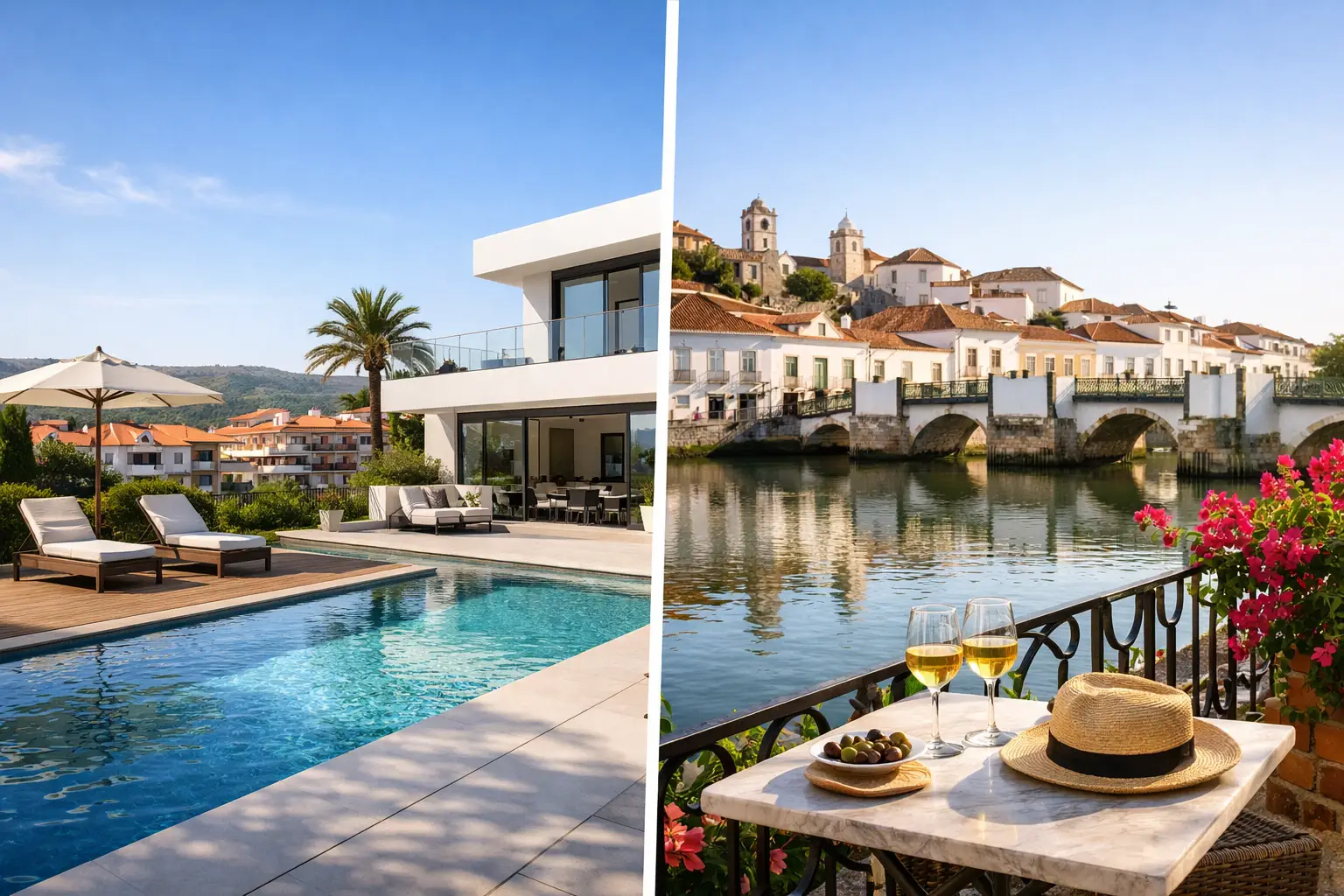
Lagos versus Tavira living: which suits you?

A choice between Lagos and Tavira is not a choice between a good Algarve town and a lesser one. Both can work brilliantly. But Lagos versus Tavira living comes down to a more practical question: do you want daily life to feel energetic and close to the coast, or quieter, flatter and more rooted in an eastern Algarve rhythm?
The property photographs will not answer that. They will not show how long it takes to leave town in August, whether your street is lively after midnight, how exposed a hillside home feels in winter, or whether the restaurants and services you imagined using remain open outside the main season. Those details matter more than a polished kitchen when you are buying a home for regular use or a permanent move.
Lagos versus Tavira living: the central difference
Lagos is the more animated, internationally familiar choice. It has dramatic beaches, a busy historic centre, a marina, a broad range of cafés and restaurants, and a visible year-round foreign resident community. It is also more built up, more visitor-facing and, in many areas, more demanding operationally during peak season.
Tavira feels more composed. The river, traditional streets, tiled facades and lower-rise centre give it a distinctly Portuguese character that has survived its popularity. It is not undiscovered, and it is not sleepy in summer, but it is generally less driven by nightlife and beach-town energy than Lagos. Its main beaches require a crossing to the island, which changes how an ordinary beach day works.
Neither town is automatically better. Lagos often suits buyers who want movement around them and easy access to a varied social life. Tavira tends to suit those who value a calmer base, gentler daily routines and a town that feels less centred on the visitor experience.
Beaches: immediate drama or a planned outing?
Lagos has one of the Algarve’s strongest beach propositions if being able to reach striking sand and cliffs quickly is high on your list. Praia Dona Ana, Camilo, Porto de Mós and Meia Praia each offer a different feel. This variety is a genuine lifestyle advantage, particularly for households who will use the coast regularly rather than just admire it from a terrace.
The trade-off is access. In summer, parking near the best-known coves can be difficult, roads become busier and the most photogenic beaches draw crowds. A home described as “walkable to the beach” may involve steep gradients, narrow pavements or a return climb that changes the calculation for young children, older relatives or anyone carrying chairs and shopping.
Tavira’s beach experience is more spacious but less immediate. Praia do Barril and Ilha de Tavira reward the effort, with long, open sand and a different sense of scale from Lagos’s sheltered coves. Yet the boat or train connection is part of the routine. For some buyers, that makes beach days feel pleasantly deliberate. For others, especially families wanting spontaneous late-afternoon swims, it becomes friction.
If the beach is central to your life, test the actual journey from the property at the time of year you expect to use it. A map pin is not a routine.
The pace of town after dark and in winter
Lagos has more going on. That is its attraction and, depending on location, its drawback. The historic centre can be vibrant late into the evening, and streets close to bars, restaurants and short-stay accommodation can carry noise well beyond the front door. Marina-side and central locations offer convenience, but they need to be judged street by street rather than by postcode.
Outside high summer, Lagos retains enough activity to avoid feeling deserted. It has services, sport, dining options and a sizeable international population. Buyers seeking an easy social landing often find that reassuring. The same visibility can make it feel less private or less traditionally local than they expected.
Tavira has a quieter evening character. There are good places to eat and a real town centre, but the tone is more dinner-and-a-stroll than late-night momentum. Winter tends to suit people who are comfortable making their own rhythm: market visits, walks, local lunch, golf, cycling, reading and time at home.
That does not mean Tavira closes down. It means expectations need to be realistic. A buyer moving from a major city may find its quieter months peaceful or limiting. The answer depends on whether you need a town to provide entertainment, or simply a pleasant framework for your life.
Property setting changes the lived experience
In Lagos, many buyers are drawn to sea views, cliffside locations and newer developments around Porto de Mós, Ponta da Piedade and the western edges of town. These can offer space and strong coastal appeal, but they can also mean reliance on a car, wind exposure and a less connected feeling outside summer. Check pavement quality, lighting and the practical route into town, not just driving time.
Central Lagos can be more convenient, yet older homes may come with narrow access, limited parking and close neighbours. A property on a charming lane can be awkward for luggage, deliveries, bins and everyday car use. If you plan frequent family visits, these details stop being minor quickly.
Tavira offers a wider range of settings than first appears: historic centre houses, riverside flats, established residential areas, countryside properties and villages nearby. The centre can be exceptionally appealing for walkability, though parking and vehicle access need careful scrutiny. Homes outside town may provide quiet and land, but the practical reality shifts towards driving for school, food shopping, appointments and evening plans.
In both locations, a view can conceal exposure. Spend time on the terrace in wind, listen for road noise with windows open, and understand what sits on adjoining land. Agent photos show the property. The surrounding streets, access and seasonal atmosphere determine whether it works.
Families, services and getting around
For families, Lagos generally offers a wider choice of activities and an easier route into western Algarve beach life. Its larger scale can be useful for sports, classes and meeting other international families. However, school-run traffic, summer congestion and the distance between residential developments and the centre should be assessed against your daily schedule.
Tavira can feel easier to navigate, particularly around the central areas, and its slower pace appeals to families who prioritise a less hectic routine. Its eastern position also makes it more convenient for trips towards Spain and Faro. But if your work, social network or preferred amenities are concentrated in the western Algarve, the distance becomes a recurring cost in time rather than an occasional drive.
Faro Airport is broadly more convenient from Tavira. Lagos is still manageable, but the transfer is longer and can feel more significant after an evening flight or with small children. For second-home owners who arrive often, this deserves more weight than it usually receives early in a search.
Rental appeal is not the same as personal fit
Lagos has strong recognition among holidaymakers, especially those drawn to beaches, boat trips and an active town atmosphere. Properties with walkable coastal access, parking and outdoor space can be especially appealing. But high demand does not remove the realities of competition, seasonal pressure, guest noise and the work required to make a home practical for visitors.
Tavira attracts a different guest: often someone seeking character, calm, island beaches and an eastern Algarve base. It may suit longer stays and travellers who value atmosphere over nightlife. A house that feels wonderfully peaceful to an owner may, however, be less convenient for guests without a car or less compelling to short-stay visitors expecting a beach outside the door.
Do not let rental potential choose the town for you if the property is also meant to serve your own life. The strongest purchase is usually one where the location works personally first, and any visitor appeal is a sensible secondary benefit.
Choose the routine, not the postcard
Choose Lagos if you want more beach variety, more energy, a livelier international scene and the convenience of a larger coastal town. Be prepared to pay close attention to traffic, parking, noise and the difference between a summer holiday setting and a year-round home.
Choose Tavira if you want a gentler tempo, a more traditional town setting and a beach routine that feels less immediate but often more spacious. Be honest about whether quieter winters and a greater reliance on a car beyond the centre will feel restorative or restrictive.
Before committing to either, build a realistic week around the specific street: morning coffee, food shopping, school or work journeys, an evening out, beach access, parking after dark and a rainy January day. That is where a confident Algarve decision is made - not in the brightest photograph.