
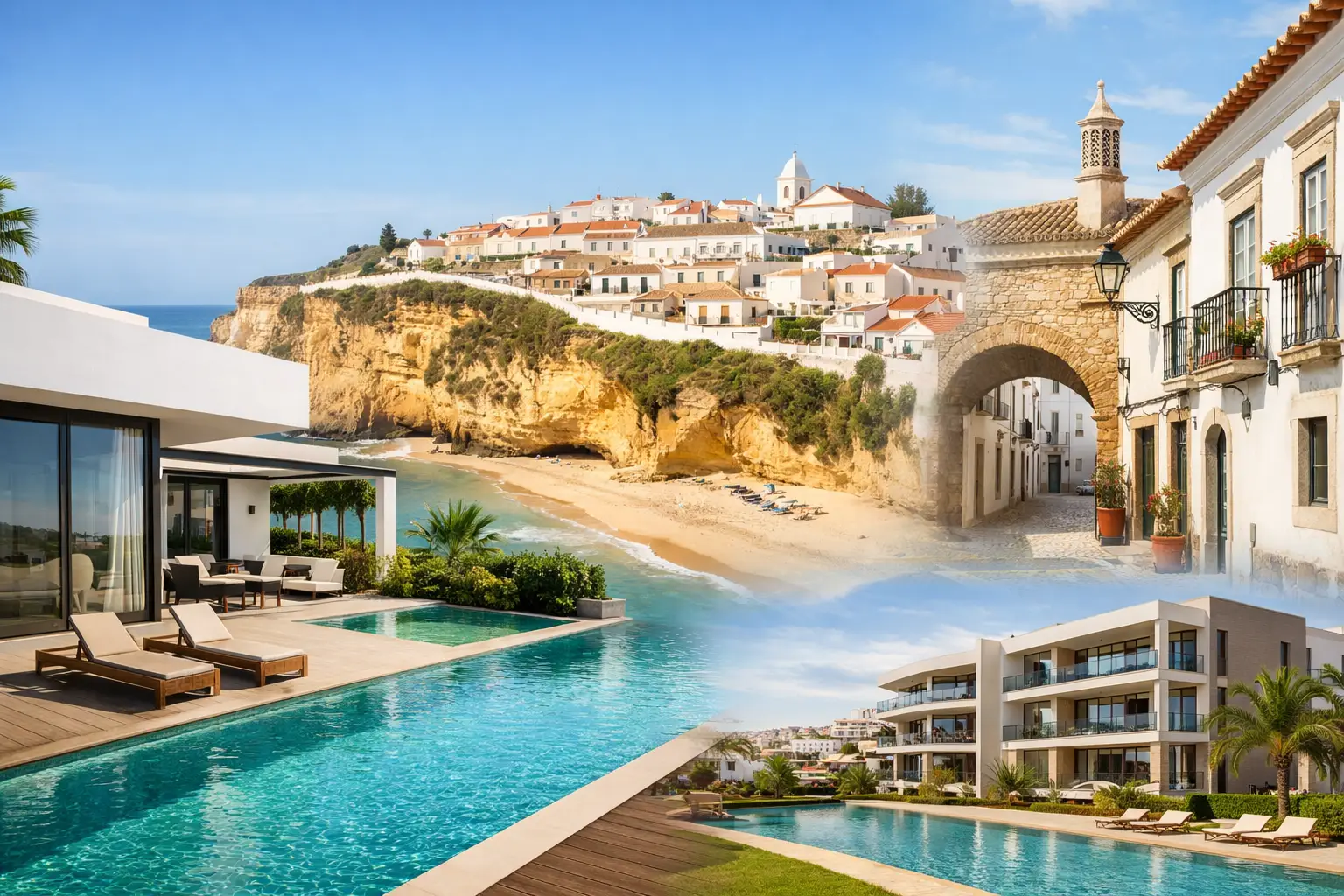
Algarve Towns Comparison for Overseas Buyers

A useful Algarve towns comparison is not a beauty contest. Nearly every town can look convincing in a sunny listing photograph, especially when the frame contains whitewashed walls, a pool and a strip of sea. The harder question is whether the place works when you need to collect groceries in August, drive somewhere on a wet January evening, host family, get children to school, or simply live there without feeling cut off.
The Algarve is compact on a map but varied in daily reality. Choosing between towns is less about finding the objectively best place and more about recognising the compromises you are prepared to make. Beach proximity, year-round life, airport access, quiet, walkability and rental appeal rarely arrive together in one neat package.
Algarve towns comparison: start with how you will use it
Before comparing town names, decide what the property must do. A couple planning long winter stays will assess an area differently from a family relocating full-time, or an owner who expects regular guests. The same house can feel brilliantly located for one brief and inconvenient for another.
Be specific. Does “near the beach” mean walking there with young children, or being within a ten-minute drive? Does “quiet” mean no late-night bar noise, or does it also mean no through traffic, construction exposure and summer footfall? Does “local” mean a functioning town in February, or simply fewer holiday lets on the immediate street?
This is where broad regional labels become unhelpful. The western Algarve, central resort belt and eastern Algarve offer distinctly different rhythms. Within each, the difference between a town centre, hillside development, marina edge and rural lane can be larger than the difference between two neighbouring towns.
Lagos: active, attractive and rarely empty
Lagos is often the strongest all-round contender for buyers who want a proper town alongside beaches and an international community. It has more year-round movement than many smaller coastal places, with restaurants, services, sport, a marina and a visible mix of residents. For people who do not want their life to narrow dramatically outside summer, that matters.
The trade-off is demand. Popular areas can feel busy, parking can become a daily calculation, and roads around the centre and waterfront carry more activity than a first viewing may suggest. Older streets offer character but may bring tight access, limited outside space and noise. Newer neighbourhoods can be easier operationally, but often feel less connected to the historic centre.
Lagos suits buyers who value walkability and life around them. It may be less suitable for someone whose version of a second home is total seclusion with effortless car access at the door.
Praia da Luz and the western villages
Praia da Luz offers a smaller-scale alternative with a beachside setting and an established international population. It can feel easier-going than Lagos, particularly for buyers who want a simple daily routine rather than an urban atmosphere. Its compactness is a benefit if you choose the right position; hills and the practical reality of walking home can change the experience considerably.
Further west, places such as Burgau, Salema and Sagres appeal to buyers drawn to a wilder coastline and a less built-up feel. They are not interchangeable. Small villages can be charming but more exposed to seasonal closure, limited choice and longer journeys for everyday errands. Sagres has a distinctive character and windier conditions that some people love and others find tiring over time.
Portimão, Praia da Rocha and Ferragudo: convenience versus setting
Portimão is often dismissed by buyers searching for postcard Portugal, yet that can overlook its practical strengths. It is a working city with significant everyday infrastructure, broader shopping and services, and a more lived-in feel beyond the visitor zones. For a buyer who values convenience, this can be more useful than an immaculate resort setting.
Praia da Rocha is a different proposition. The beach is dramatic and the holiday infrastructure is substantial, but the seasonal intensity, tall buildings and late-night activity require clear-eyed assessment. A property a few streets back can have a very different noise profile from one facing the main strip. This is not an area to judge from a daytime viewing alone.
Across the river, Ferragudo feels lower-rise and more village-like, with a handsome waterfront and strong visual appeal. It attracts buyers seeking character while staying close to Portimão’s practical resources. Its popularity also means that parking, narrow streets and summer circulation deserve attention. The prettiest lane is not automatically the easiest place to own a car, receive deliveries or manage guests.
Carvoeiro and the central coast: polished but patchy in winter
Carvoeiro remains a favourite for second-home buyers because it is scenic, familiar to international owners and surrounded by established residential areas. The coastline, dining choice and relative ease of social life make it appealing for people who want an uncomplicated holiday base.
However, “Carvoeiro” covers a broad collection of settings. A clifftop villa, a house near the centre and a property on an inland development may all use the same postal identity while delivering very different access, privacy and winter atmosphere. Some roads are steep or narrow, and walking distances that look modest on a map can be less appealing in heat or with limited mobility.
The central coast also includes resort-led communities around Alcantarilha, Porches and Armação de Pêra. They can offer good beach access and a more straightforward lock-up-and-leave format, but buyers should distinguish between a place that feels lively in August and one that has enough life for their intended months of use. Rental demand may be strong in the right location, but operational ease depends on parking, arrival routes, building condition and the practical layout of the property.
Albufeira and Vilamoura: choose the micro-area, not the headline
Albufeira gives buyers scale, beaches and extensive holiday demand. It also has sharp contrasts. The old town, marina, Strip-adjacent areas and outer residential zones do not belong in one simple category. Some parts are geared towards nightlife and high summer turnover; others offer ordinary residential life with reasonable access to facilities.
For buyers who want a property used mainly by visiting friends or holidaymakers, the town’s recognition and beach offering can be attractive. For those prioritising calm, a school-run routine or a settled residential feel, selection needs to be much more precise. Noise travels differently across slopes, and a quiet viewing can be a poor guide to peak-season reality.
Vilamoura is more planned and polished, with marina life, golf, wide roads and a strong international owner base. It is convenient for some lifestyles and can feel easy to navigate. Yet it is not automatically walkable from every residential development, and the distinction between being near a facility and being comfortably connected to daily life is meaningful. Consider the routes you will actually take, not just the amenities marked nearby.
Loulé: daily-life strength without a beach address
Loulé is often a better answer than buyers expect. It is an active inland town with a genuine year-round rhythm, useful services and a more Portuguese everyday feel than many coastal hotspots. For full-time movers, especially those happy to drive to the beach, its practical depth can outweigh the absence of a sea view.
It also gives access to surrounding countryside and established residential areas. That said, rural or semi-rural does not automatically mean peaceful. Road noise, barking dogs, agricultural activity, drainage, road width and distance from shops can shape daily comfort. A hillside view can come with a winding access road that becomes far more relevant after the excitement of purchase has faded.
Tavira, Olhão and the eastern Algarve: gentler pace, different logistics
Tavira appeals to buyers who prefer historic character, a slower pace and a town that functions beyond the main holiday months. It is attractive for longer stays and for people who want restaurants, cafés and ordinary errands within a recognisable town setting. The beaches are excellent, but they are not always a simple walk from the centre. Island access and travel time should be treated as part of the routine, not an occasional detail.
Olhão is more working-port than resort postcard. Its market, waterfront and local energy appeal to buyers seeking a less curated environment. It can be a strong choice for someone who values authenticity and access to Faro, while being a less natural fit for those expecting manicured resort surroundings.
Further east, Vila Real de Santo António and nearby coastal communities can offer flatter terrain, a Spanish-border convenience and a quieter feel. The eastern Algarve is often warmer in character and less dramatic in coastline than the west. It suits buyers who prefer ease and space over clifftop spectacle.
Make the comparison street-level before committing
Town-level research is a sensible first filter. It is not enough for the final decision. The lived reality of a property is determined by the approach road, the nearest parking space, the neighbour’s terrace, a seasonal bar, a school route, the amount of shade in winter and whether you can hear the pool area from the main bedroom.
When narrowing your shortlist, assess each location against the same practical questions: what is open in winter, how long are the journeys you will repeat, where do visitors park, what changes in August, and does the setting match the life you actually intend to lead? ARC’s role is to help buyers look beyond the listing frame and understand that context before a location becomes an expensive assumption.
The right town is usually the one whose compromises you barely notice after a few ordinary weeks. Aim for that test, rather than the place that makes the strongest first impression.