
Algarve Property Buyer Guide for Better Choices

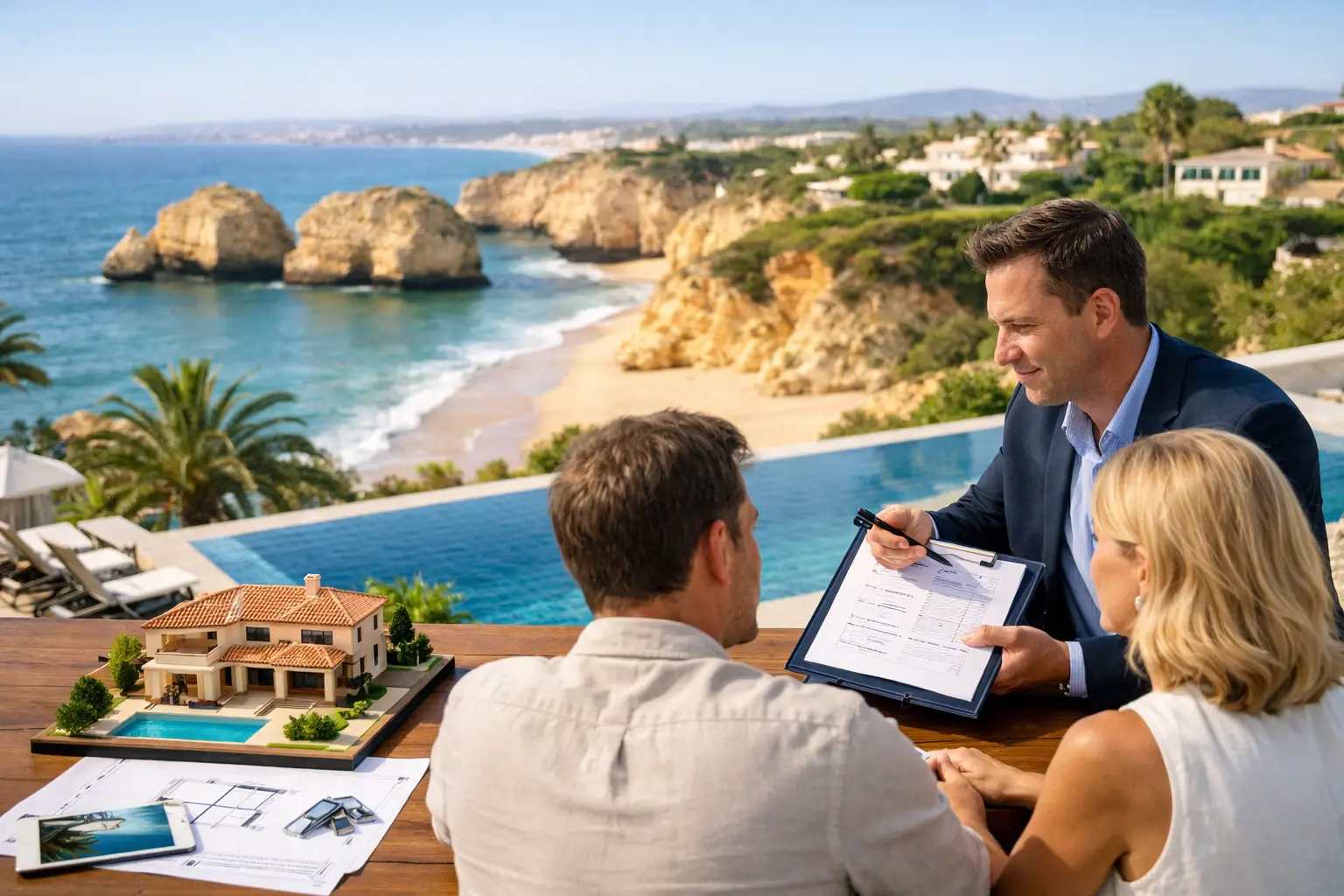
A pool, a pale stone terrace and a strip of sea on the horizon can make almost any listing feel like a decision waiting to be made. But an Algarve property buyer guide should begin where listing photography ends: at the gate, on the approach road, in the surrounding streets and during the ordinary hours when no one is trying to sell the view.
For overseas buyers, the main risk is rarely failing to find attractive property. It is mistaking an attractive property for the right place to live, spend holidays or hold as an investment. The Algarve is not one lifestyle market. It is a collection of very different towns, villages, resorts, rural pockets and coastal neighbourhoods, each with its own rhythm, practical limits and seasonal reality.
Start with the life you want, not the property type
Many searches begin too broadly: a three-bedroom villa near the beach, a lock-up-and-leave flat, a house with rental potential. Those are useful filters, but they do not answer the question that determines whether a purchase works: what does a normal Tuesday look like here?
A family may need a manageable school run, room for visiting relatives, access to activities outside high summer and a location where daily errands do not require a long drive. A retiree may value level walking, nearby healthcare, cafés that remain open through winter and a neighbourhood that feels inhabited rather than dormant. An investor may need to think less about a photogenic pool and more about guest arrival, luggage access, parking, sleeping capacity, noise exposure and the practical cost of keeping the property presentable.
Write a brief around non-negotiables before you fall in love with a listing. Include how often you will use the home, whether you will drive every day, who will stay there, your tolerance for summer activity and how much maintenance you genuinely want to manage. The answers often point towards an area or property form that looks less glamorous online but performs better in real life.
Choose an area before chasing individual listings
The distance between two Algarve locations can look trivial on a map and feel substantial in practice. Roads, parking, elevation, traffic at peak periods and the need to cross busy routes can change a simple journey. So can the difference between being five minutes from a beach and being able to reach it comfortably with children, shopping or limited mobility.
Broadly speaking, established towns tend to offer more year-round services and everyday convenience. Resort-oriented areas can be easier for holiday use, with maintained surroundings and a familiar international feel, but may have a different winter atmosphere and ongoing communal costs. Rural and semi-rural homes can offer privacy, space and dramatic views, while asking more of the owner in driving, maintenance, utilities and response times when something goes wrong.
None of these is inherently better. The problem comes when buyers expect a rural hillside home to offer town-centre convenience, or expect a lively summer location to feel identical in January.
Download the FREE Algarve Area Explorer now >
Test the season you will actually use
If your use will be mainly school holidays, visit during a busy period. If you plan to relocate permanently, spend time outside the main season as well. A street that is pleasantly quiet in February may be full of footfall, traffic and late-night activity in August. Conversely, an area that feels polished and energetic in summer can become noticeably quieter when seasonal businesses close.
Winter is not a flaw. For many buyers, it is exactly the slower, more local character they want. The point is to see it before making assumptions. Check which shops, restaurants and services remain open, how the neighbourhood feels after dark, and whether the place still suits your preferred pace of life.
Use this Algarve property buyer guide at street level
A property is not just its plot boundary. Its lived value is shaped by the last kilometre of the journey, the road outside, the neighbouring plots and the way people use the area.
When assessing a specific home, arrive by the route you would use most often. Is the access road narrow, steep, rough or difficult to pass oncoming vehicles? Is there room to turn, unload shopping and park visiting cars? A beautiful house can become tiring if each arrival involves a difficult manoeuvre or a long carry from limited parking.
Then stay still for a while. Listen for road noise, barking dogs, construction, pool equipment, restaurant activity and aircraft. Look beyond the current view: is nearby land vacant, agricultural, established or visibly being prepared for development? Notice whether terraces and gardens are genuinely private, particularly from upper floors and neighbouring balconies.
These are not reasons to reject every imperfect home. They are factors to price into your expectations. A busy road may be a reasonable compromise for walkability. A steep approach may be acceptable for a holiday base used occasionally, but less appealing for a household making daily journeys. The aim is not perfection. It is a clear-eyed fit.
Download the FREE Algarve Area Explorer now >
Ask questions photographs cannot answer
Listing images are designed to show the property at its best. They rarely reveal where bins are collected, whether a lane becomes congested at school times, how far a supermarket really is, or whether the sun disappears from the terrace at three o'clock in winter.
Build your viewing around practical questions. Where does everyone park in August? What is the walk to the nearest useful amenity, not just the nearest landmark? Does the property feel exposed when neighbouring homes are occupied? How much outside space is usable rather than decorative? Is there a dependable place for guests to arrive and leave luggage?
For flats and managed developments, spend time in shared areas. Entrances, lifts, parking, storage, pool surroundings and rubbish points tell you a great deal about how the building is run and who uses it. A smart communal pool does not automatically mean a calm, private experience in peak season.
Treat renovation potential with healthy scepticism
‘Needs updating’ can mean cosmetic work, or it can mean an extended project involving access constraints, specialist labour, disruption and a longer period before the home is enjoyable. The Algarve has excellent renovation opportunities, but the gap between a mood board and an operational project can be wide.
Start with the practicalities. Can materials and trades reach the house easily? Is there space for deliveries and waste removal? Will work affect neighbours or be limited by the location? Older properties may also come with layouts, drainage, insulation, ventilation or utility arrangements that need more thought than the photographs suggest.
Do not let a lower asking price turn a demanding project into a bargain by default. Renovation is often worthwhile when the location, plot, access and underlying character are unusually strong. It is harder to justify when the property is merely cheaper because it sits in a compromised position.
Separate holiday appeal from year-round usability
The strongest properties often have both, but buyers should decide which matters more. Holiday appeal may come from proximity to the beach, restaurants and a lively setting. Year-round usability usually depends on easier parking, storage, heating and cooling comfort, daily services, a practical layout and a community that does not disappear for much of the year.
For a second home, consider the reality of arrival on a Friday evening after a flight delay. For a relocation, imagine a wet winter morning, a medical appointment, a grocery run and friends visiting for a week. For investment use, think like a guest with unfamiliarity rather than like an owner who knows every shortcut.
This exercise can be revealing. It may move you from a headline coastal postcode to a slightly less obvious neighbourhood with better access and more useful everyday infrastructure. That is not settling. It is buying for the life you intend to have.
Download the FREE Algarve Area Explorer now >
Make viewing time do more work
A short reconnaissance trip can be valuable, but only if it is structured around decisions. Rather than filling days with unrelated viewings, compare a small number of areas against the same criteria: atmosphere, access, services, privacy, seasonal use, property condition and travel practicality. Patterns appear quickly when you assess like against like.
Keep notes immediately after each visit. Memory is unreliable when several terraces, pools and sea views begin to blur together. Record what you saw outside the property as carefully as what you saw inside it. A home can be excellent, yet wrong for your priorities because of one recurring friction point.
ARC's role is to help buyers see that wider context before they commit significant time and capital. Agent photos show the property. Independent local insight shows the setting in which you will actually use it.
The best next step is not to widen the search when choices feel confusing. Tighten your brief, return to the places that still make sense after the excitement fades, and ask whether each one would work on an ordinary day. That is where a confident property decision begins.